RECENT US tariff measures against Malaysian exports have sparked critical questions about the evolving dynamics of global trade, economic influence, and Malaysia’s position in an increasingly multipolar world.
While official figures and political rhetoric dominate headlines, the deeper story lies in what these actions reveal about shifting global priorities, strategic recalibrations, and the long-term resilience of Malaysia’s export-driven economy.
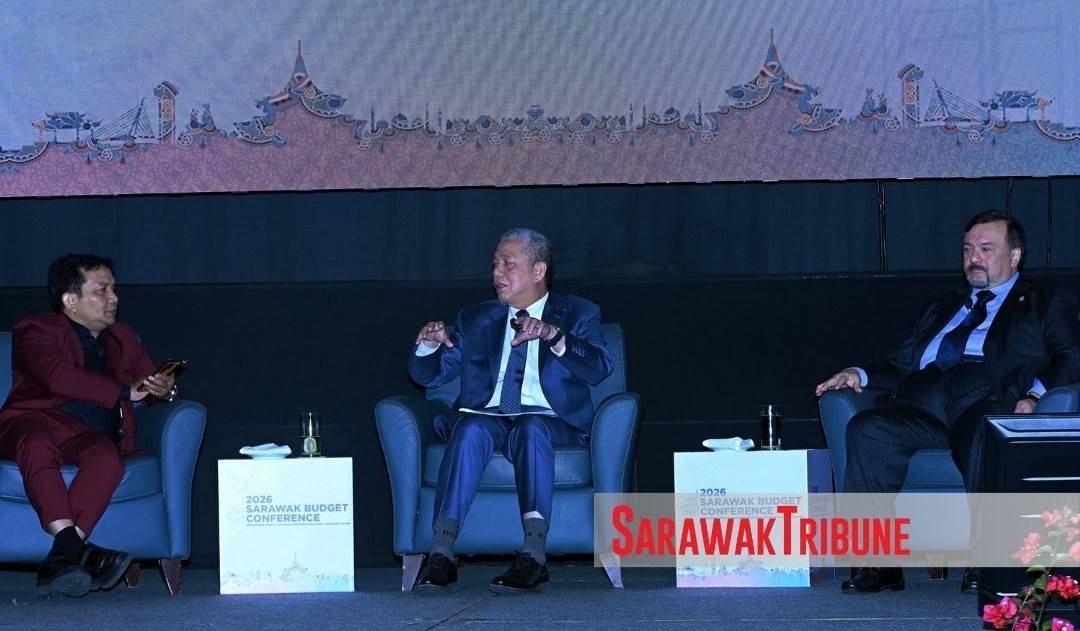
To shed light on these developments, Sarawak Tribune (ST) spoke to Universiti Malaysia Sarawak (UNIMAS) senior lecturer, Dr Dzul Hadzwan Husaini, to take on the wider implications.
ST: What are the main factors that prompted the United States to impose tariffs on goods from Malaysia? Is this a case of fair trade, or a form of economic or political pressure?
Dzul: The United States’ decision to impose tariffs on Malaysian exports is driven by a combination of trade concerns, fiscal policy considerations, and geopolitical strategy. The US government has alleged that Malaysia imposes a combined 47 per cent burden on American goods through tariffs, non-tariff barriers, and alleged currency manipulation. As a retaliatory move, it imposed reciprocal tariffs of up to 24 per cent on Malaysian exports.
However, the Malaysian government has publicly disputed the validity of the 47 per cent figure, asserting that it does not reflect the actual trade structure and calling for a fair and fact-based reassessment.
Furthermore, the US has issued contradictory statements in recent months, including exempting certain products and reducing tariffs to 10 per cent for specific goods. This inconsistency suggests that the issue remains fluid and unsettled, making it difficult to assess the true economic impact.
Beyond trade imbalances, the US tariffs also serve broader objectives which are to increase fiscal revenue, encourage domestic production, and possibly exert geopolitical pressure, especially in light of Malaysia’s growing engagement with alternative economic blocs such as BRICS.
Which Malaysian sectors or products are most affected by the US tariffs?
To properly assess the impact, we must assume a scenario in which tariffs are applied broadly to all major export products without considering temporary exemptions.
Under this assumption, the most affected sectors include electrical and electronics (E&E), particularly semiconductors, due to their central role in global supply chains and the production of US final goods, as well as pharmaceuticals and medical devices, which have grown in significance since the pandemic and represent an expanding share of Malaysia’s high-value exports.
Malaysia’s reliance on intermediate goods rather than final products also makes it more vulnerable to such trade actions, highlighting the urgent need for economic upgrading and diversification to improve long-term resilience.
How do these tariffs impact Malaysia–US bilateral trade relations?
Although the impact is less severe than the US-China trade conflict, the tariffs nonetheless strain Malaysia-US economic relations. They reflect Washington’s willingness to use trade tools to assert influence, especially when a partner country – like Malaysia – signals a potential shift in economic alignment, such as its recent interest in joining BRICS.
Such measures may be seen as subtle geopolitical signals warning against moving too close to rival blocs. While official diplomatic ties remain intact, Malaysia will need to navigate these sensitivities carefully to maintain trade access while pursuing strategic autonomy.
What are the short-term and long-term implications of these tariffs on Malaysia’s economic growth?
Short-term impacts include reduced export competitiveness, weaker investor sentiment, and potential depreciation of the ringgit due to lower capital inflows.
Long-term effects, however, depend on how Malaysia responds. If the country succeeds in diversifying its trade partners and upgrading its industrial base toward final, high-value-added products, the negative effects may be mitigated. Industrial policy, human capital investment, and stronger regional integration will be crucial to ensuring long-term resilience.
Can Malaysia renegotiate or challenge these tariffs through international institutions such as the World Trade Organisation (WTO)?
While Malaysia has the technical right to bring the issue to the WTO, recent developments have shown the limited effectiveness of this path. The US has undermined the WTO’s dispute settlement mechanism and shown a willingness to withdraw from international bodies that do not align with its interests.
Therefore, Malaysia is more likely to pursue bilateral dialogue or regional cooperation platforms to address these trade frictions effectively.
What steps can the government or local industries take to reduce the negative impact of these tariffs?
To mitigate the negative effects of US tariffs, both the Malaysian government and local industries must adopt a holistic and long-term strategic response. One key approach is to diversify Malaysia’s export destinations beyond the United States by expanding trade with emerging markets in South Asia, the Middle East, and Africa. This strategy will reduce overdependence on a single market and enhance Malaysia’s global trade resilience.
Equally important is the need to transition from primarily exporting intermediate goods to developing final products with greater value-added and higher local content. Achieving this requires sustained investment in automation, technology adoption, and research and development (R&D), as well as support for local firms to move up the value chain.
Malaysia should also prioritise regional economic integration, particularly within ASEAN. Strengthening intra-regional supply chains would allow the region to buffer against external disruptions and geopolitical shocks. Ultimately, policy consistency, institutional support, and close collaboration between public and private sectors will be essential in ensuring that Malaysia emerges stronger and more self-reliant in the face of trade-related uncertainties.
How might these tariffs influence foreign investors operating in Malaysia?
Foreign investors will evaluate two key factors: the severity of tariffs and Malaysia’s relative competitiveness. If Malaysia remains a lower-tariff base compared to regional alternatives, it could attract new investment. However, prolonged uncertainty could deter long-term commitments.
Sectors like rubber and medical gloves may benefit from trade diversions if tariffs on other producers are higher, positioning Malaysia as a preferred production hub under current circumstances.
How competitive is Malaysia in today’s global trade landscape?
Malaysia remains competitive in key sectors such as semiconductors, aerospace components, and pharmaceuticals.
However, as global trade dynamics shift rapidly, future competitiveness will depend on the country’s ability to invest in emerging industries (such as electric vehicles and renewable energy), strengthen the halal economy, and accelerate both digital and green transitions.
In today’s landscape, competitiveness is defined by innovation, adaptability, and strategic market positioning, rather than merely low production costs.
Is Malaysia truly prepared for the rapid changes in the global economy?
Malaysia has strong structural fundamentals, but competing in a volatile global economy requires more than stability. It demands policy consistency, institutional reform, and long-term vision.
Countries like South Korea have succeeded by combining strong governance with bold industrial policies. Malaysia must now follow suit by enhancing its economic resilience and ensuring national development strategies are executed with discipline, regardless of political cycles.