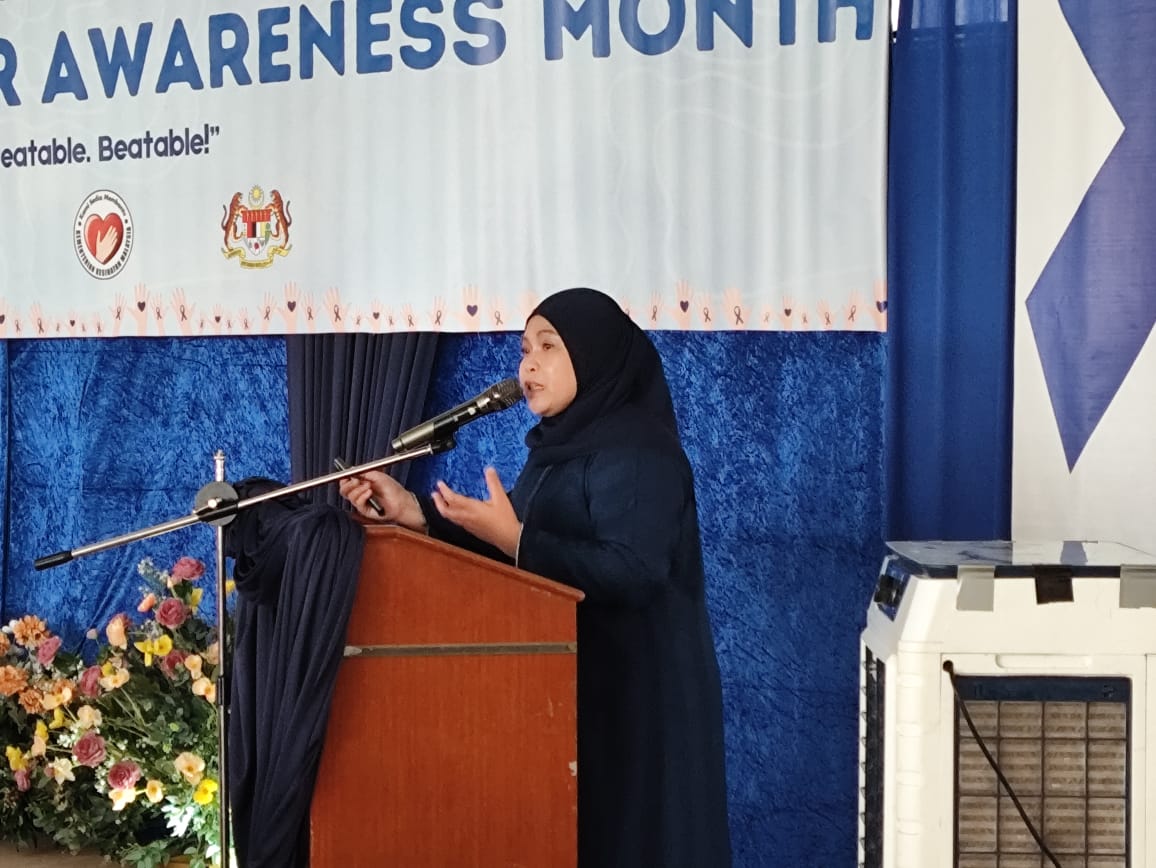
KUCHING: Colorectal cancer is now the second most common cancer in Malaysia, with growing concern over late detection of cases in Sarawak.
Professor Dr Aini Fahriza Ibrahim, a colorectal surgeon at UNIMAS, stressed the importance of early detection during the launch of the Colorectal Cancer Awareness Campaign 2025 at the Sarawak General Hospital on Friday.
Dr Aini emphasised the need to diagnose colorectal cancer at an early stage, noting that many patients are still detected at stage four even though medical advances have been made.
“Even at this age, we still have many patients come in at stage four,” she said.
“Early detection can significantly increase the chances of successful treatment.”
The latest statistics show that in 2024, more than 3,200 colonoscopies have been performed in Kuching, but many people are still reluctant to undergo screening due to cultural taboos and fear.
Despite the availability of screening options, lack of awareness continues to be a barrier to early detection of the disease.
Symptoms that are often mild in the early stages mean that many people delay seeking medical treatment.
“We want to emphasise the importance of screening, the importance of early detection, and the importance of why the treatment needs to be done as soon as possible,” she said.
Despite progress in screening efforts, low awareness and reluctance to seek medical help still exist, especially when symptoms are not noticeable.
Currently, Malaysia’s colorectal cancer guidelines are expected to be updated by 2027.
Dr Aini is working with the Ministry of Health to improve screening protocols.
Dr Aini also shared local challenges.
“In Limbang Hospital, we have second-hand power, but the real issue lies in the scopes.
“While the facilities are there, we struggle to provide the necessary services due to maintenance issues,” she said.
As a step forward, Dr Aini said that cooperation from all parties is very important in ensuring that awareness of colorectal cancer continues to increase.
She said that continued efforts need to be made to strengthen the screening system, so that more patients can be detected at an early stage and receive appropriate treatment.